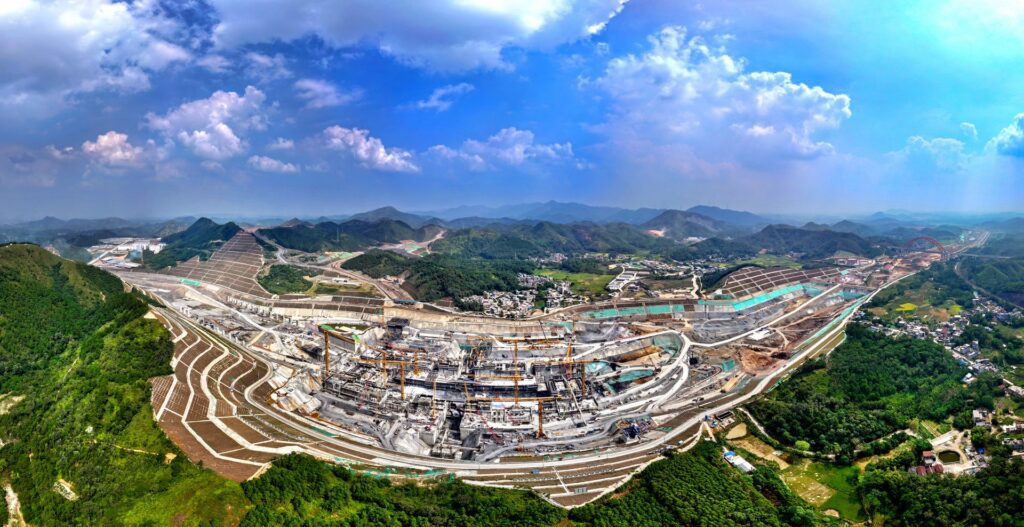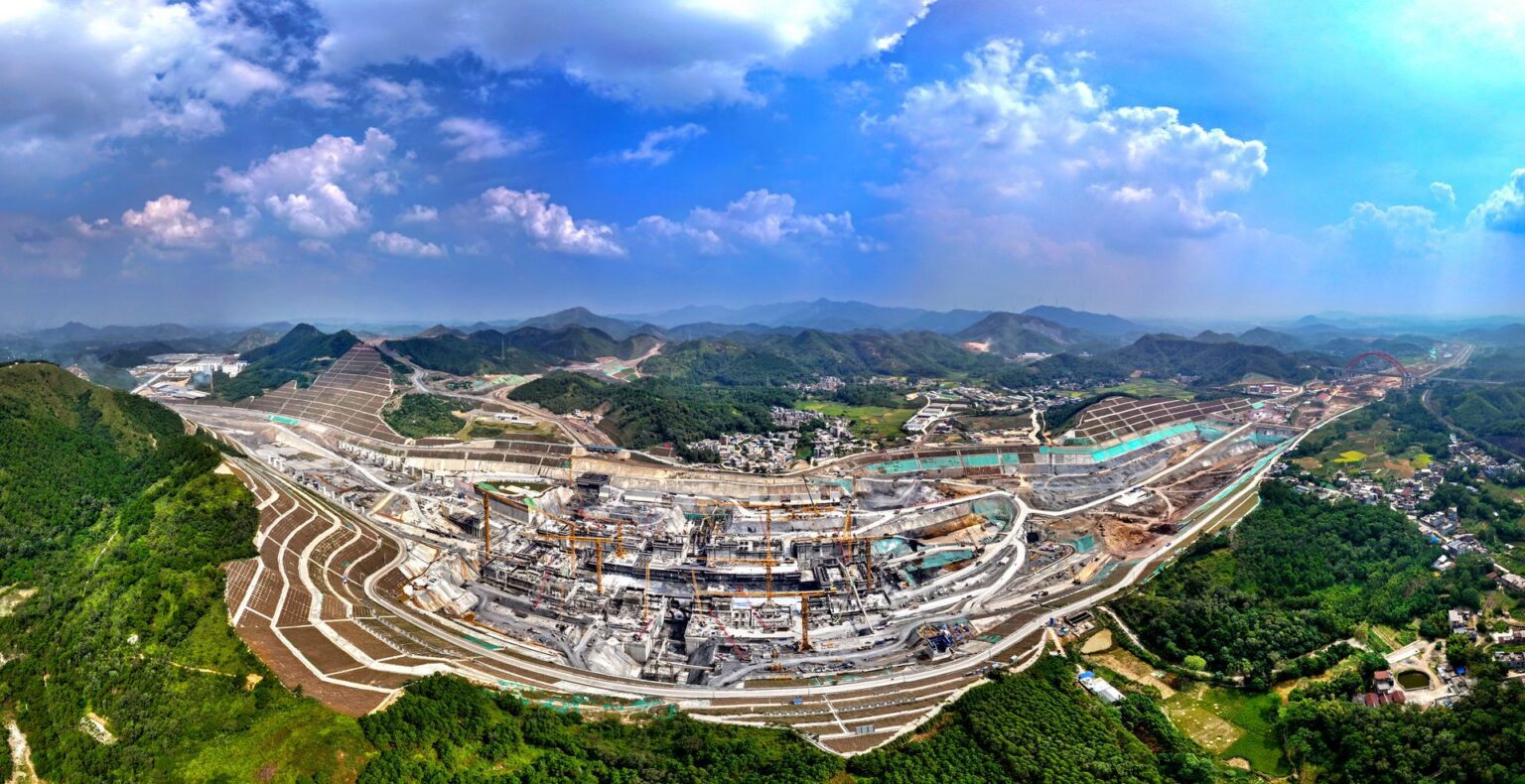
In the lush, mountainous landscapes of southern China, a massive transformation is underway. Stretching 134 kilometers through the Guangxi Zhuang Autonomous Region, the Pinglu Canal is being hailed as China’s “Project of the Century.”
As we move through 2026, this $10 billion engineering marvel is nearing its operational debut. But for the global business community, it’s far more than just a new trench in the ground—it is a total reconfiguration of how goods flow between the world’s second-largest economy and the Southeast Asian markets.
Why it matters
- It strengthens China’s “New International Land-Sea Trade Corridor” by giving inland provinces a shorter route to the sea.
- It can lower freight costs by more than 5.2 billion yuan a year for areas along the corridor, according to state media and related reporting.
- It helps connect western and central China more efficiently to domestic ports and ASEAN trade routes.
Pinglu canal
The Pinglu Canal is the first major waterway project built since the founding of the PRC. It connects the inland river systems of the Xijiang River (a tributary of the Pearl River) directly to the Beibu Gulf in the South China Sea.
The construction started in August 2022 and is scheduled to be completed by the end of December 2026. It is currently reported to be in its final stage, with navigation expected to begin by the end of 2026.
After completion, the Pinglu Canal is expected to be run as a modern, multifunctional waterway, not just a shipping channel. It will combine navigation, flood control, water supply, irrigation, and ecological management, with supporting logistics hubs such as Nanning and Qinzhou ports being being enhanced with logistics facilities to handle increased inland-to-sea transfers
The shortcut
Currently, goods from southwest China must travel east to Guangzhou or Hong Kong to reach the sea. The Pinglu Canal creates a “vertical” shortcut, reducing the shipping distance to the ocean by over 560 kilometers.
The scale
Designed to accommodate 5,000-ton vessels, the canal requires an excavation of 340 million cubic meters of earth—three times the volume moved for the Three Gorges Dam.
Slashing costs
By bypassing the congested Pearl River Delta, the canal is expected to save over 5.2 billion yuan ($725 million) annually in transportation costs.
| Metric | Before Pinglu Canal | With Pinglu Canal |
| Shipping Route (Inland to Sea) | ~1,000+ km (via Guangzhou) | ~450 km (Direct) |
| Transit Time (Chongqing to Singapore) | ~22 Days | ~7–10 Days |
| Annual Freight Capacity | N/A | ~108 Million Tons |
A new gateway to ASEAN
The canal is the “missing link” in China’s New International Land-Sea Trade Corridor. For businesses operating in the RCEP (Regional Comprehensive Economic Partnership) framework, the implications are profound:
Industrial Clusters: New “Canal Economic Belts” are already attracting heavy industries like lithium-ion battery manufacturing, paper pulp, and minerals.
Direct Access: Landlocked provinces like Sichuan and Guizhou now have a “back door” to the sea, making their exports more competitive in Vietnam, Malaysia, and Indonesia.
Resilient Supply Chains: By diversifying away from the Malacca Strait and the congested ports of Shanghai and Ningbo, companies can hedge against regional bottlenecks.
The “green” dividend
In an era of tightening ESG (Environmental, Social, and Governance) reporting, the Pinglu Canal offers a sustainability boost. Water transport is significantly more fuel-efficient than road or rail.
- The canal is projected to reduce carbon emissions by approximately 660,000 tons per year by shifting heavy freight from trucks to ships.
The Pinglu Canal isn’t just a Chinese infrastructure project; it’s a strategic pivot toward Regional Gravity.
As it opens in later this year, the “Made in China” label for the ASEAN market will become faster and cheaper to deliver. For global businesses, now is the time to look at Nanning and Qinzhou not as provincial outposts, but as the new, high-tech hubs of the Indo-Pacific trade route.
Limited global impact
Unlike Panama’s ocean-spanning role, Pinglu is a river-to-gulf feeder that boosts China’s western logistics at a scale of ~1-2% of total global maritime cargo; its main effect is strengthening ASEAN integration, not rewriting worldwide freight patterns.
However, the Canal will create modest competitive pressure on Singapore and Hong Kong ports by diverting some regional feeder traffic to Beibu Gulf ports (Qinzhou, Fangchenggang). Singapore/Hong Kong handle massive global volumes (Singapore: 39M TEU, Hong Kong: 14M TEU annually); Pinglu’s inland focus and bulk cargo emphasis mean it captures niche ASEAN flows, not their deep-sea dominance.
Infrastructure boom?
Inspired by the Pinglu canal, several Chinese provinces have proposed or started major canal projects.
Key proposals:
- Hunan (Xianggui Canal): Links Hunan to Guangxi, ~300 km link canal connecting Yangtze and Pearl River systems; proposed for the 15th Five-Year Plan (2026-2030).
- Zhejiang-Jiangxi-Guangdong (Zhe-Gan-Yue Canal): A massive 1,988 km north-south system longer than the Grand Canal, linking eastern provinces to Guangdong’s export hubs; pre-feasibility studies underway.
- Henan: Plans to connect Yellow River, Huai River, and Yangtze River for access to the Yangtze Delta economic zone.
- Hubei (Jinghan Canal): Jingzhou-Wuhan link; currently actively promoted, with Han River upgrades for 2,000-ton vessels by 2029.
- Anhui (Jianghuai Canal): Operational since 2023, linking Yangtze and Huai rivers.
Total investment across these projects and Pinglu exceeds 850 billion yuan; they form part of Beijing’s 2021 plan for integrated high-capacity waterways, with 20-30 year timelines for completion.
Connecting inland potential to global markets
The Pinglu Canal represents a major push toward sustainable, high-capacity inland logistics. By leveraging waterways to move large volumes with reduced emissions, China is prioritizing green freight as a key driver of regional integration. The canal’s multi-purpose design also secures essential water supplies and supports local agriculture through improved irrigation and flood management.
Integrated into the New International Land-Sea Trade Corridor, the canal is a strategic asset for national logistics, not just a local project. It aims to unlock the economic potential of inland provinces by streamlining transport routes to the sea. For investors, this means a more efficient and affordable business environment in Guangxi, further strengthening the region’s role as a vital link in the trade corridor between China and ASEAN markets.
Navigating China market
We provide comprehensive, customized market entry advisory support designed to navigate the complexities of cross-border expansion with precision. Our approach goes beyond generic consulting; we deliver tailored strategies that align your specific business objectives with local regulatory frameworks, including company setup, tax structuring, corporate compliance and M&A support.
Latest Articles: