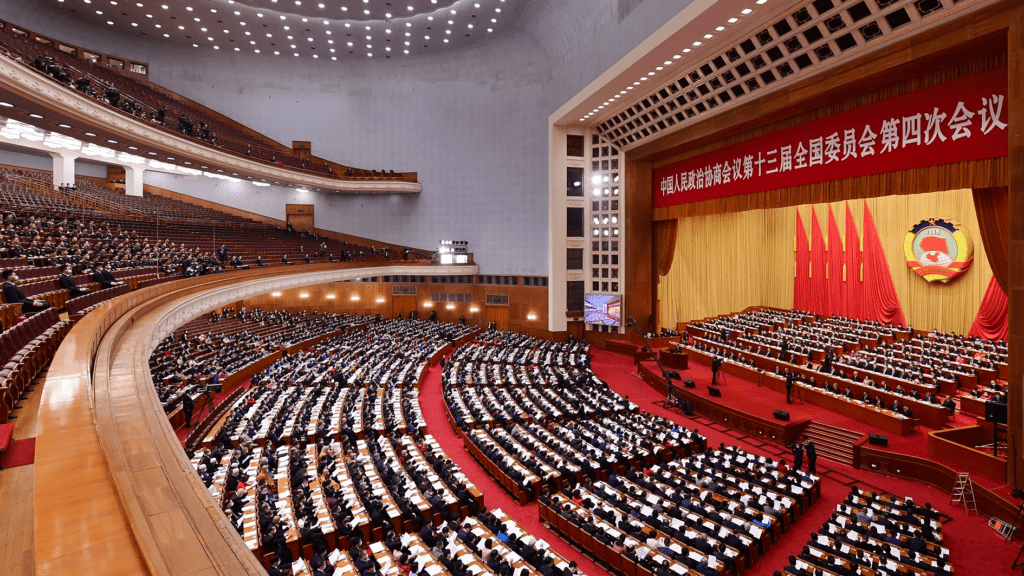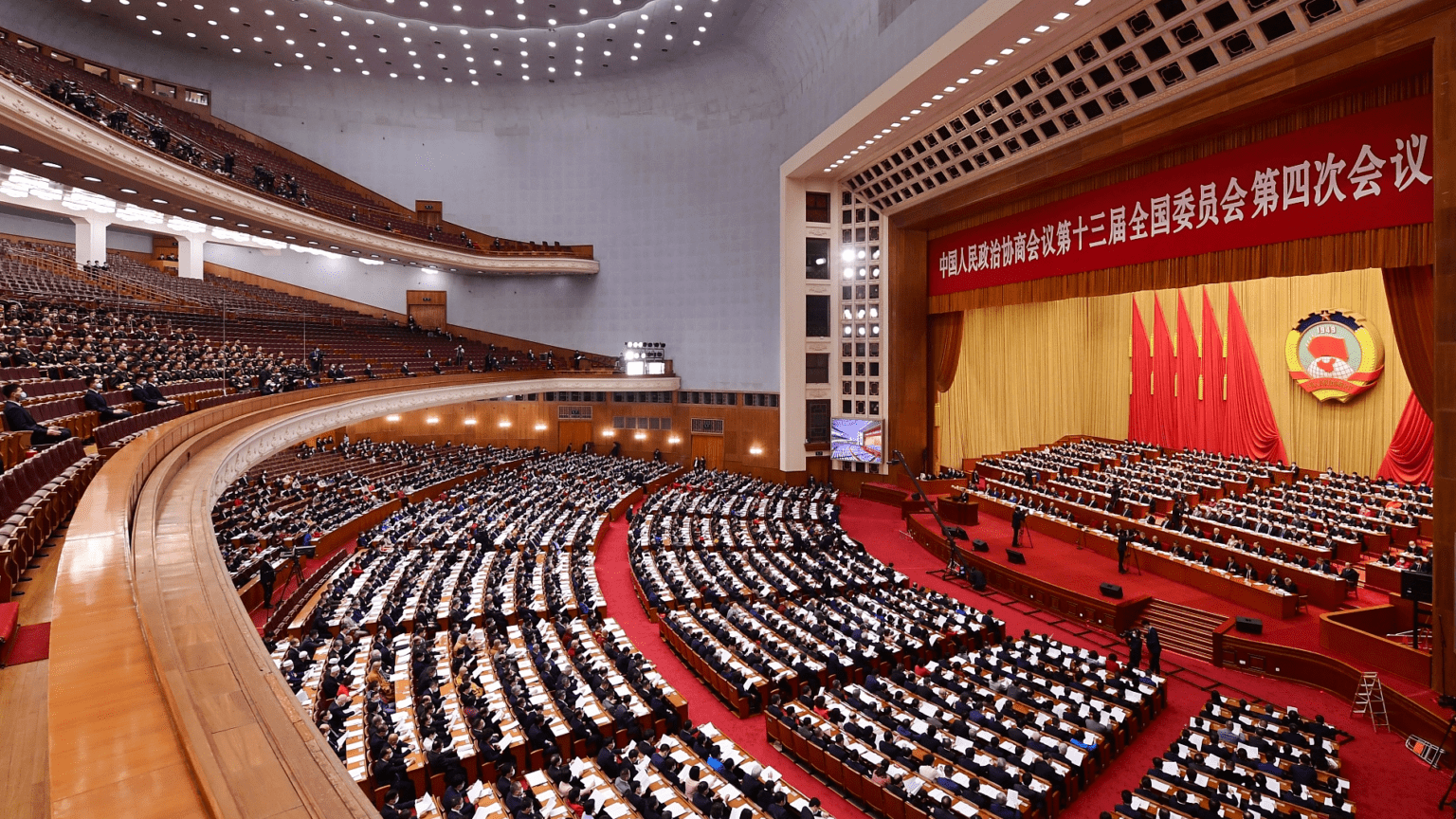
The curtain has officially risen on the 15th Five-Year Plan (2026–2030). This massive policy blueprint, spanning over 140 pages, arrives at a defining moment for the world’s second-largest economy. As global trade tensions simmer and domestic demographic shifts accelerate, Beijing is signaling a pivot from “growth at all costs” to a “sharper, more resilient edge.”
Reflections on the 14th Plan: A Foundation of Resilience
Before charting the next five years, Chinese leadership spent much of the opening “Two Sessions” reflecting on the results of the 14th Five-Year Plan (2021–2025). By most internal metrics, the period was a success of survival and consolidation despite global challenges like COVID-19.
Key Results (2021–2025):
- Economic Scale: China’s GDP crossed the historic 134 trillion-yuan mark (approx. $18.9 trillion) in 2024.
- Quality Indicators: Per capita GDP rose to $13,445, firmly anchoring the nation in the upper-middle-income bracket.
- Tech Frontiers: The period saw the completion of the world’s largest 5G network and the successful deployment of the Beidou-3 satellite system.
- Climate Shortfalls: Despite a 12% drop in carbon intensity, China fell short of its ambitious 18% reduction target, a reality that heavily influenced the more “pragmatic” targets of the new plan.
Aerospace Milestones
China completed its first domestically built aircraft carrier with electromagnetic catapults and operationalized the world’s second space station. A pioneering lunar far-side sample return mission succeeded, alongside progress in deep-space exploration.
ICT and Networks
The nation built 4.6 million 5G base stations, leading globally in scale, and advanced 6G research with satellite networks like Beidou for global coverage. Low-altitude sensing networks and smart transportation systems integrated drones and AI for real-time monitoring.
Advanced Manufacturing
Records were set in crystalline silicon PV cell efficiency, with PV and wind capacity additions exceeding 100 GW annually for four years. Cumulative new energy vehicle sales topped 40 million units, maintaining world-leading production.
Frontier Technologies
Key gains included quantum information, integrated circuits (e.g., computing chips, IGBTs), AI, brain-machine interfaces, and biotech like regenerative medicine. Four national science centers were established in Beijing, Shanghai, Guangdong-Hong Kong-Macao, and Hefei.
The 14th Plan proved that while China could withstand the “once-in-a-century” shocks of the pandemic, the era of double-digit growth is firmly in the rearview mirror.
The 15th Five-Year Plan
If the 14th Plan was about cushioning shocks, the 15th Plan—covering 2026 to 2030—is about industrial modernization and securitization.
New Growth Targets
Beijing has set a GDP growth target of 4.5% to 5% for 2026, a “proactive and pragmatic” range that acknowledges the slowing global economy. Officials describe this as the “peach that can be reached by jumping”—challenging but attainable.
The 4.5–5% range growth target is unusual and can be viewed it as a move toward stability over speed.
Technological Sovereignty
- The phrase “New Quality Productive Forces” is the mantra of this era. The plan mandates an average annual growth of over 7% in R&D investment, focusing on “chokehold” technologies:
- Semiconductors and AI: Reducing dependence on Western supply chains.
- Quantum Technology: Establishing early leadership in the next computing revolution.
- Strategic Minerals: For the first time, the plan explicitly pledges to maintain China’s global lead in rare earths.
Investment in Infrastructure
A striking pillar of the 15th Five-Year Plan is the evolution of China’s “bricks and mortar” strategy into a “Steel and Silicon” hybrid. Beijing has moved beyond the era of simple real estate expansion, focusing instead on “New Infrastructure.” This involves a massive 7 trillion yuan (approximately $1 trillion) investment pipeline for 2026 alone, targeting hyper-scale intelligent computing clusters, a nationwide 6G-ready network, and “Digital Twin” cities.
Beyond the digital realm, the physical landscape is also shifting; the plan prioritizes Strategic National Projects like the China–Kyrgyzstan–Uzbekistan railway and the expansion of “Zero-Carbon Transport Corridors“—a network of battery-swapping and rapid-charging stations designed to facilitate long-haul electric freight. This isn’t just about building for the sake of growth; it is about creating a specialized, high-tech skeleton for the economy that reduces logistical costs and cements China’s lead in the global green transition.
A Cautious Green Transition
The plan sets a target to reduce carbon intensity by 17% by 2030. While some international observers call this a “missed opportunity” for higher ambition, Beijing is balancing green goals with energy security, ensuring that coal remains a stabilizing backup as wind and solar capacity—already world-leading—continues to double.
What it Means for Foreign Invested Companies
Official 2025 data shows utilized FDI in China reached approximately $107 billion, a 9.5% year-on-year decrease. The 15th Five-Year Plan presents a landscape of “selective openness.” The days of broad-market entry are being replaced by a “High-Standard Opening-Up” strategy.
Expansion of pilot opening programs will target sectors like biotechnology, value-added telecommunications, and wholly foreign-owned hospitals. Additionally, the negative list for cross-border service trade is set to be further reduced. At the same time, 15th Five-Year Plan signals heightened scrutiny of foreign firms in strategic tech sectors, as part of its push for technological sovereignty and supply chain security.
- The Opportunity: Beijing is hungry for foreign expertise in modern services, biotechnology, and green finance. If your company aligns with China’s “high-quality development” goals—such as Schneider Electric’s R&D centers or BMW’s localized battery supply chains—the red carpet remains rolled out.
- The Challenge: Companies in “traditional” sectors or those competing directly with emerging state-backed tech may find the environment increasingly securitized. The plan emphasizes “institutional opening up,” meaning foreign firms will be expected to adhere to stricter data-security laws and contribute more to local innovation ecosystems rather than just selling into the market.
Tech Sector Restrictions
A key measure mandates that 50% of equipment for new semiconductor capacity must come from domestic providers, sidelining foreign machinery suppliers. State-funded data centers face a blanket ban on foreign AI accelerators, accelerating decoupling from Western tech.
Broader Implications
While the plan promotes “expanded openness” and market unification for fair competition, it prioritizes national security reviews, export controls, and self-reliance in critical areas like chips and AI. Foreign firms may see collaboration opportunities in non-sensitive fields like green energy but face intensified regulatory oversight and competition from subsidized domestic players.
For foreign firms, the message is clear: be part of the solution to China’s bottlenecks, particularly in high-end services and green tech, or risk becoming irrelevant.
Latest Articles: